Skip to comparison · Request a quote from Aurora
12V vs 24V LED Work Lights: Comparison Table
| Dimension | 12V only | 24V only | 10-60V wide voltage |
|---|---|---|---|
| Passenger car | OK | No | OK |
| Light truck / SUV | OK | No | OK |
| Heavy truck | No | OK | OK |
| Excavator / loader / dozer | No | OK | OK |
| Tractor (compact utility) | OK | No | OK |
| Tractor (4WD row-crop) | No | OK | OK |
| Mining truck | No | OK | OK |
| Cold crank survival | Often fails | Often fails | Survives |
| Load-dump survival | Fails | Fails | Survives |
| Mixed-fleet SKUs | Two SKUs needed | Two SKUs needed | One SKU |
| Aurora recommendation | No | No | Yes |
Aurora benchmark: Aurora's 10-60V wide-voltage work lights run on every 12V and 24V heavy equipment system plus the full cold-crank dip and alternator load-dump spike. One SKU fits every machine in a mixed fleet — the standard from a genuine led work light manufacturer.
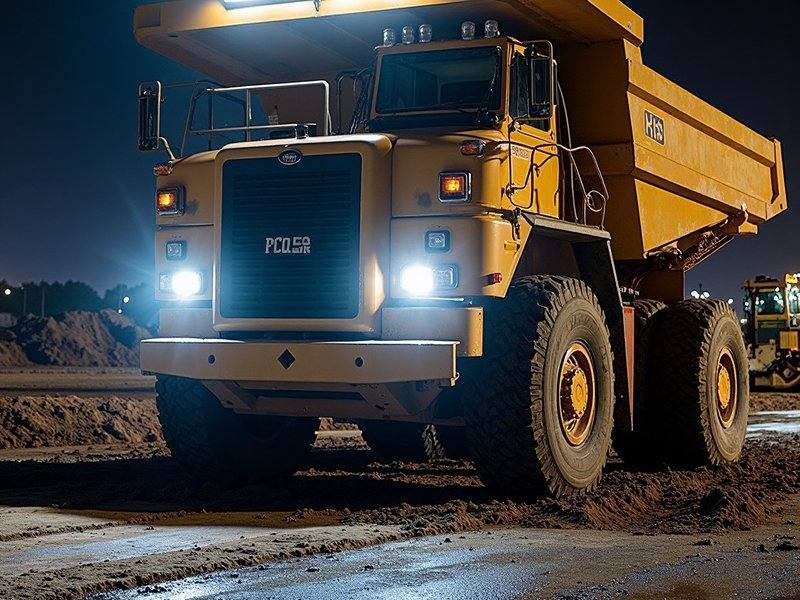
The Physics: Why Voltage Determines LED Work Light Life
An LED work light is not a light bulb. It is a power supply (the driver) feeding a precision semiconductor (the LED chip). The driver converts vehicle battery voltage to the constant-current the LED needs. When vehicle voltage swings outside the driver's input range, the driver fails — and the light dies, even though the LED chip itself is fine.
Three real-world events stress the driver:
Cold Crank Dip
When the engine starts, the starter motor pulls 200-800 amps from the battery. Battery voltage sags dramatically:
- 12V system sags to 8V or lower for 100-500ms
- 24V system sags to 16-18V for the same window
A "12V only" light with input range 10-14V shuts off or browns out during every crank. A "24V only" light with input range 22-28V does the same. The driver IC may latch off and never recover without a power cycle.
Alternator Load-Dump
When a heavy load disconnects suddenly (battery cable loose, main fuse opens), the alternator's field energy dumps into the vehicle bus as a voltage spike:
- 12V system spikes to 36-40V for up to 400ms
- 24V system spikes to 60V for the same window
A "12V only" driver rated to 18V input dies instantly on load-dump. The MOSFET ruptures, the capacitor explodes, the light is dead. This is the #1 cause of premature failure for narrow-voltage work lights on heavy equipment.
Steady-State Charging Voltage
When the engine runs, the alternator charges the battery above nominal:
- 12V system charges to 14.4V (14.7V on some AGM)
- 24V system charges to 28.8V
A "12V" light rated 10-14V runs continuously above its rating whenever the engine is on. The driver runs hot, capacitor lifespan halves every 10°C, and the light dies in 1,000-3,000 hours instead of 50,000.
Why 10-60V Wide Voltage Wins For Heavy Equipment
A 10-60V wide-voltage driver absorbs every event above:
- 8V cold crank dip — driver stays above 10V minimum, light stays on
- 60V load-dump spike — driver clamps the input, no damage
- 28.8V steady-state charge — driver runs within spec, normal lifespan
For a fleet manager, the additional benefit is SKU simplification. A mixed fleet of 12V trucks and 24V excavators needs only one work light SKU — not two. Inventory, spare parts, and field service all simplify. Aurora's 10-60V wide-voltage work lights are the standard for heavy equipment fleets for exactly this reason.
The 9-36V variant covers passenger vehicles, light trucks, and 12V/24V systems without the full load-dump range — appropriate for vehicles with established electrical protection (most modern trucks and SUVs).
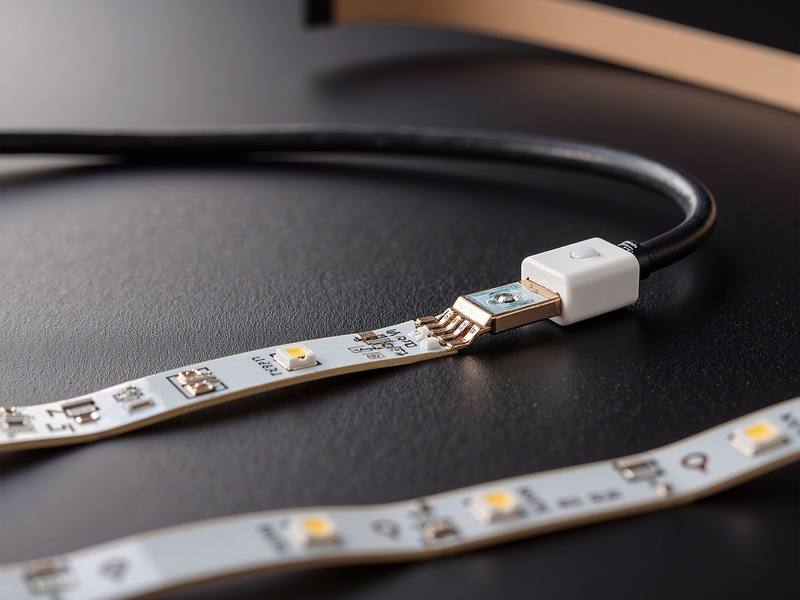
Current Draw: Why 24V Systems Are More Efficient
For the same wattage, a 24V system draws half the current of a 12V system:
| Light wattage | 12V current | 24V current | Wire gauge (5m run, 3% drop) |
|---|---|---|---|
| 60W | 5.0A | 2.5A | 12 AWG / 14 AWG |
| 120W | 10.0A | 5.0A | 10 AWG / 12 AWG |
| 240W | 20.0A | 10.0A | 8 AWG / 10 AWG |
This is why heavy trucks, construction equipment, and mining trucks standardized on 24V — lighter wire, smaller connectors, less resistive loss. A 240W light bar on a 12V system pulls 20 amps, requiring 8 AWG cable for a 5m run. The same light on 24V pulls 10 amps and runs safely on 10 AWG.
For work lights specifically, the practical wattage range (20-120W per light) makes 12V practical for small installations (single light, short cable) and 24V preferable for multi-light arrays and long cable runs. Aurora's 10-60V wide-voltage lights handle both without compromise.
Voltage Drop: The Hidden Killer On Long Cable Runs
Cable resistance causes voltage drop proportional to current and distance. A 10m cable run on a 12V system pulling 10A loses 0.8V on 12 AWG cable — 6.6% drop, beyond the 3% standard. The light at the end of the cable sees 11.2V, which is below the operating range of a "12V only" light.
This is why implement lighting on tractors (long cable run from battery to implement) and trailer lighting on trucks (10-15m cable run) often flicker or dim with narrow-voltage lights. The fix is either heavier cable (more copper cost) or a wide-voltage light that tolerates the drop.
Aurora's 10-60V wide-voltage work lights tolerate a 5V drop on a 12V system or a 14V drop on a 24V system without performance loss — making them ideal for implement lighting, trailer lighting, and long cable runs where voltage drop is unavoidable.
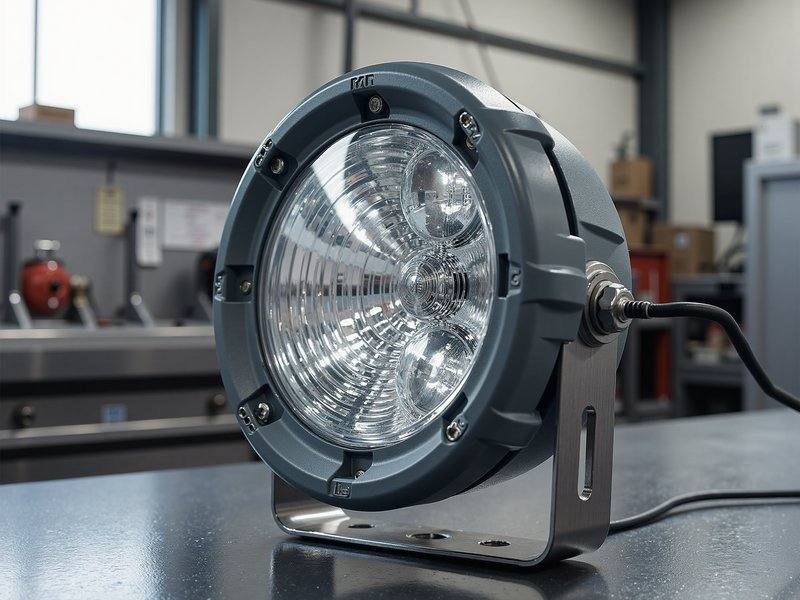
Aurora Wide-Voltage Work Lights: Engineering Details
Aurora's wide-voltage driver design includes:
- Wide-input buck-boost topology — maintains constant LED current across the full 10-60V range
- Input transient suppression — TVS diode clamps load-dump spikes above 60V
- Input filter capacitor — rides through cold-crank dip without brownout
- Thermal shutdown — driver shuts down cleanly at 125°C junction, recovers when cool
- Potting — driver PCB potted in silicone for vibration and moisture resistance
Combined with genuine Osram/Luminus chips (50,000+ hour lifespan), IP68/IP69K sealing (pressure-washable), 3-axis vibration validation per ISO 16750-3, 480+ hour salt spray resistance, and -40~+85°C operating range — Aurora's wide-voltage work lights are the engineering standard for heavy equipment.
Aurora credentials: 35,000㎡ IATF 16949-certified factory in Shenzhen, 400+ employees, 40 R&D engineers, 6 automated SMT lines, 1,000,000+ pieces monthly capacity, supplying Walmart, Bosch and Ford supply chains. Patents in thermal management and beam control. OEM/ODM with brand licensing available. MOQ 100 pcs standard, 500+ pcs for custom tooling. Lead time 20-25 days standard, 30-40 days for bulk.
FAQ
Can I use a 12V LED work light on a 24V system?
No. A 12V-only work light's driver IC will fail instantly when connected to a 24V system — typically the input capacitor ruptures or the MOSFET shorts. Use a 24V-specific light or, better, a 10-60V wide-voltage light that handles both. Aurora's 10-60V wide-voltage work lights run on any 12V or 24V system without modification.
Can I use a 24V LED work light on a 12V system?
No. A 24V-only work light will not turn on or will flicker continuously on a 12V system — the driver cannot boost the input to the LED forward voltage. Use a 12V-specific light or a 9-36V / 10-60V wide-voltage light instead.
What is a wide-voltage LED work light?
A wide-voltage LED work light has a driver that accepts a broad input range — typically 9-36V or 10-60V — and maintains constant LED current across that range. This allows the same light to run on both 12V and 24V vehicle systems plus the voltage swings from cold crank (dip) and load-dump (spike). Aurora's 10-60V wide-voltage work lights are the heavy-equipment standard.
Why do my LED work lights keep failing on my excavator?
The most likely cause is voltage swing. Excavators run 24V systems that dip to 18V during cold crank and spike to 60V during load-dump. A narrow-range "24V only" light cannot survive these swings — the driver IC fails within weeks. The fix is a 10-60V wide-voltage work light. Aurora's wide-voltage work lights survive every cold-crank and load-dump event on heavy equipment.
Author & Source
This guide was researched and written by Engineer Xie, LED Optical Engineer at Shenzhen Aurora Technology Limited. All voltage-range analysis, driver topologies and durability benchmarks are drawn from Aurora's IATF 16949 production system and current OEM project records.