Skip to checklist · Request a quote from Aurora
Custom LED Light Bar OEM Process: 7-Stage Overview
| Stage | What happens | Aurora benchmark |
|---|---|---|
| 1 | RFQ + spec sheet | Engineering review in 1 business day |
| 2 | Sample build + photometric lock | Beam pattern locked in photometric lab |
| 3 | Tooling (housing / reflector / bezel) | 500+ pcs MOQ for new tooling |
| 4 | SMT mass production | 6 automated lines, 1,000,000+ pcs/month |
| 5 | Assembly + IP sealing + driver install | IP68/IP69K sealed, 9–36V or 10–60V |
| 6 | Final validation + CoP | Salt spray 480h, thermal cycle -40 to +85°C |
| 7 | Packaging + shipping | OEM box, manual, E-Mark/DOT/CE docs |
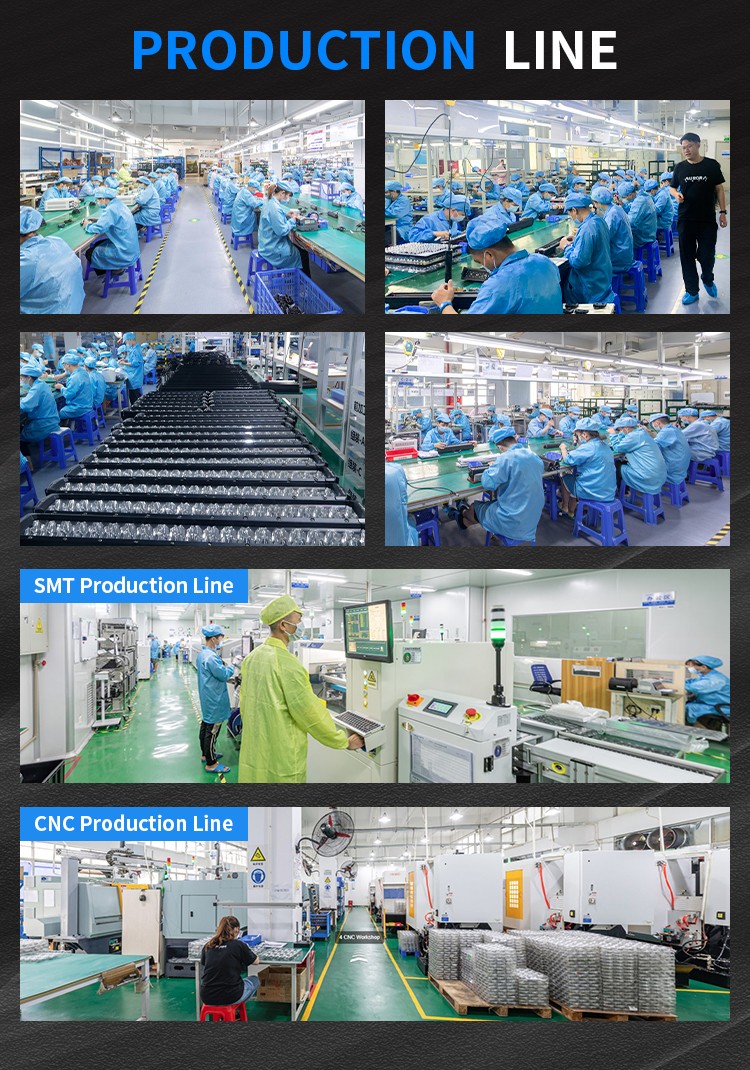
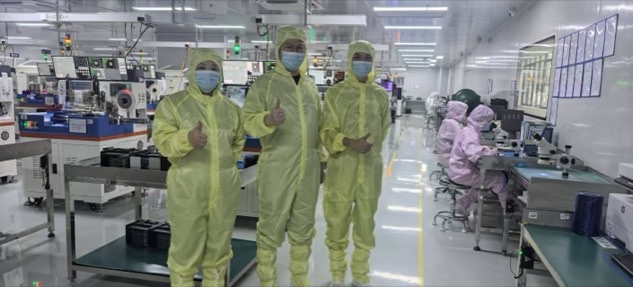
Aurora benchmark: All 7 stages run under one roof in Aurora's 35,000㎡ Shenzhen factory — 6 automated SMT lines, 1,000,000+ pcs/month capacity, 400+ staff, 40 R&D engineers, genuine Osram/Luminus lot-traceable chips (50,000+ hour lifespan, brightness up to 50,000+ lumens), IP68/IP69K sealing, IATF 16949/DOT/E-Mark/CE/RoHS. A genuine led light bar manufacturer.
Stage 1: RFQ And Engineering Review
The oem led light bar process starts with the RFQ. A real factory does not just quote a price — it runs an engineering review of the spec sheet: beam pattern, length, chip choice, operating voltage, mounting, bezel design, connector type, packaging, certification requirements. Vague RFQs ("we want a 20" light bar") get vague quotes; precise RFQs get precise quotes and a sample plan.
Aurora's engineering team responds within one business day with a structured quote: BOM breakdown, tooling requirements, MOQ threshold (100 pcs standard, 500+ pcs for new tooling), lead time (20–25 days standard, 30–40 days bulk), certification path (E-Mark, DOT, CE, RoHS), and a sample build timeline. If the RFQ specifies lot-traceable Osram/Luminus chips, IP68/IP69K sealing, and IATF 16949 quality system, the quote reflects all three — not just the cheapest version.
Stage 2: Sample Build And Photometric Lock
Before any tooling spend, the factory builds a sample. For stock housings with custom branding, the sample uses an existing extrusion, reflector, and driver with the OEM's logo, packaging, and (if applicable) custom beam tuning. For new tooling programs, the sample is a functional prototype built from CAD drawings — verifying beam pattern, fitment, and electrical performance before committing to mass tooling.
Aurora's photometric lab locks the beam pattern at the goniophotometer before mass production. The IES photometric file is reviewed with the customer, and any beam adjustment is iterated in reflector CAD until the pattern matches the target. This is the difference between a factory that designs beam optics vs one that ships "approximately" the spec sheet — and then drifts batch to batch.
Stage 3: Tooling: Housing, Reflector, Bezel
For new tooling programs, the housing extrusion die, reflector tooling, and custom bezel mold are committed here. Tooling cost and timing are the most under-quoted part of any OEM program — a real factory is honest about the 30–40 day lead time for new tooling and the 500+ pcs MOQ threshold required to amortize the tooling investment.
Aurora's 40-engineer R&D team holds patents in thermal management and beam control. Tooling is run in-house under IATF 16949 process control — the same quality system that supplies the Walmart, Bosch, and Ford supply chains. For stock housings with custom branding, MOQ is 100 pcs and lead time is 20–25 days — no new tooling required.
Stage 4: SMT Mass Production
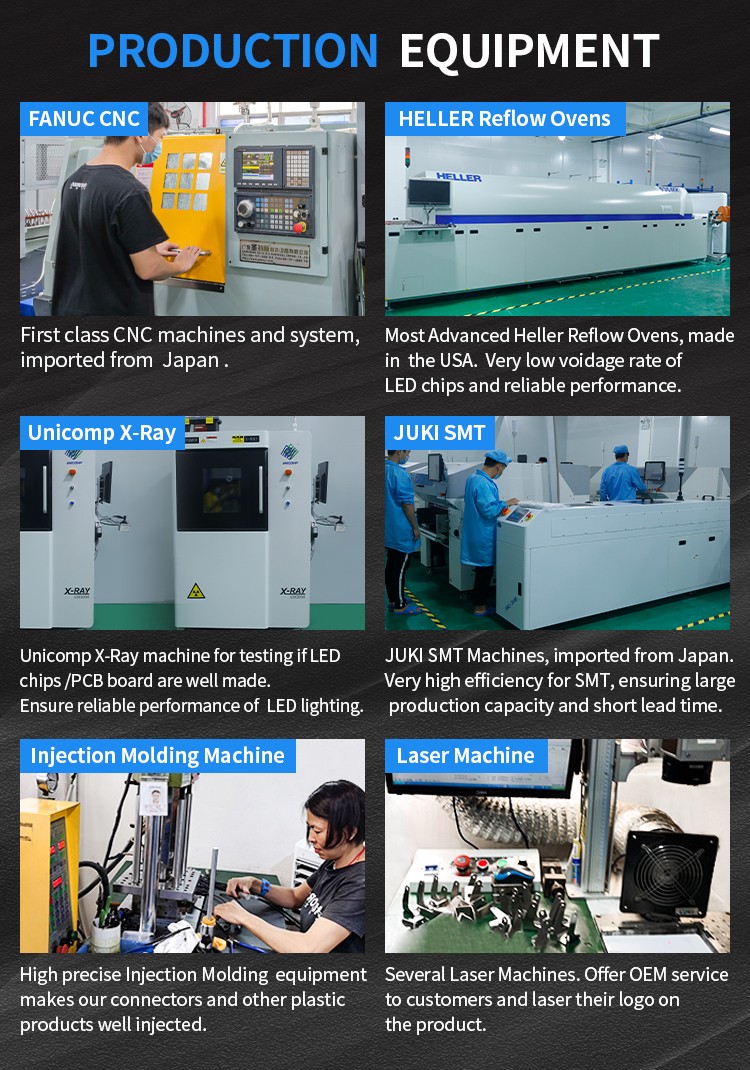
With sample approved and tooling committed, the order enters SMT mass production. Aurora runs 6 fully automated SMT lines with high-speed pick-and-place machines — 1,000,000+ pcs/month capacity. Genuine Osram or Luminus chips (lot-traceable to the original purchase invoice) are placed on aluminum MCPCB for thermal dissipation — the foundation of 50,000+ hour lifespan.
Reflow soldering follows a locked SAC305 thermal profile verified per batch. AOI (Automated Optical Inspection) scans every board for solder bridges, missing components, and misaligned chips. Boards that fail AOI are reworked before final sealing — catching defects here is cheap; catching them after IP sealing and shipping is brutally expensive.
Stage 5: Assembly, Sealing, And Driver Install
The assembled PCB enters the housing, the constant-current driver is installed in the end cap, and the connector (Deutsch DT or equivalent IP68 waterproof) is crimped. Aurora's drivers are specified to the operating voltage range — 9–36V for 12V vehicle systems, 10–60V for mixed 12/24V applications — with protection against load dumps, reverse polarity, and over-voltage per IATF 16949 automotive standards.
The housing is sealed with a one-piece silicone gasket, the lens is bonded with UV-stable adhesive, the end caps are torqued to spec, and the breather valve is installed. The sealed bar enters the IP test tank — IP68 means continuous immersion to 1.5m for 30+ minutes, IP69K means high-pressure (100 bar) high-temperature (80°C) water jet from multiple angles. Every bar is pressure-tested before packaging.
Stage 6: Final Validation And Conformity Of Production
Mass production validation is the stage most factories skip — and it is the one that defines long-term product reliability. Aurora's in-house lab runs every batch through:
- Integrating sphere — total lumen output vs locked target
- Goniophotometer — beam distribution vs locked IES file
- Salt spray chamber — 480+ hours of corrosive salt fog
- Thermal cycle chamber — -40 to +85°C repeated cycling
- Vibration table — corrugated dirt road simulation
- IP test tank — IP68 immersion + IP69K high-pressure jet
Annual Conformity of Production (CoP) audits keep E-Mark and other regulatory certifications valid. This is the validation level required to supply the Walmart, Bosch, and Ford supply chains — and it is exactly what separates a real factory from a workshop with a website.
Stage 7: Packaging, Documentation, And Shipping
The validated bar is packaged with OEM custom box, manual, mounting hardware, and certification documents (E-Mark, DOT, CE, RoHS). For programs that ship to multiple regional markets, the documentation set is matched to each destination's regulatory requirement — E-Mark for EU/ECE, DOT for US road-legal, CE for general EU safety.
Aurora ships under IATF 16949 process control with full lot traceability — every chip, every batch, every test report is traceable back to the original purchase. This is the documentation level that lets a brand owner defend a warranty event in any market — and it is the difference between a factory that ships product and one that ships verified, traceable, defensible product.
OEM Process Checklist
- [ ] IATF 16949 certificate with number and issuing body
- [ ] Lot-traceable Osram/Luminus chip invoices
- [ ] IP68/IP69K test report with lab name and date
- [ ] Salt spray 480+ hour validation
- [ ] Thermal cycle -40 to +85°C validation
- [ ] In-house photometric lab (goniophotometer + integrating sphere)
- [ ] Sample approval before tooling spend
- [ ] MOQ 100 pcs standard, 500+ pcs for new tooling
- [ ] Lead time 20–25 days standard, 30–40 days bulk
- [ ] E-Mark / DOT / CE / RoHS certification path
- [ ] Reference customers in the automotive supply chain
FAQ
What is the MOQ for a custom LED light bar?
A genuine OEM factory like Aurora supports 100 pcs MOQ for stock housings with custom branding, and 500+ pcs MOQ for new tooling (custom housing, custom reflector, custom bezel). Lead time is 20–25 days for standard runs and 30–40 days for new tooling. Suppliers offering 1 pc MOQ with "full customization" are almost always trading companies.
How long does the custom LED light bar OEM process take?
From RFQ to first mass production shipment: typically 20–25 days for stock housings with custom branding, and 30–40 days for new tooling programs. Sample build adds 7–10 days before tooling commit. Aurora's engineering team responds within one business day of RFQ.
What certifications should a custom LED light bar factory have?
IATF 16949 (automotive quality management, not just ISO 9001), E-Mark under ECE R10 (for EU/ECE road-legal), DOT (for US road-legal), CE (general EU safety), RoHS (material compliance). Aurora holds all five in its 35,000㎡ Shenzhen facility — supplying the Walmart, Bosch, and Ford supply chains.
How do I verify a real custom LED light bar factory?
Verify IATF 16949 certificate with number and issuing body, demand lot-traceable Osram/Luminus chip invoices, request IP68/IP69K test report with lab name and date, validate in-house test lab (integrating sphere, salt spray 480+ hours, thermal cycle -40 to +85°C), and ask for two reference customers in your industry. Aurora welcomes on-site or virtual audits.
Author & Source
This guide was researched and written by Engineer Xie, LED Optical Engineer at Shenzhen Aurora Technology Limited. All process benchmarks, MOQ and lead-time numbers are drawn from Aurora's IATF 16949 production control system and current OEM project records.