Skip to standards table · Request a quote from Aurora
LED Work Light Vibration Testing: Standards Comparison
| Standard | Scope | Test type | Typical use | Aurora validation |
|---|---|---|---|---|
| ISO 16750-3 | Road vehicle electrical/electronic | Random vibration + mechanical shock | Passenger + commercial vehicle | Yes |
| SAE J1455 | Heavy-duty truck electrical/electronic | Random vibration + shock + temperature | Class 6-8 truck | Yes |
| IEC 60068-2-64 | General random vibration | Broad-band random vibration | Industrial equipment | Yes |
| IEC 60068-2-27 | Mechanical shock | Half-sine shock, 15-50g/11ms | Boom impact, off-road | Yes |
| IEC 60068-2-6 | Sine vibration | Swept sine (resonance search) | Resonance identification | Yes |
| MIL-STD-810H | Military environmental | Multi-axis vibration + shock | Defense vehicles | Select programs |
Aurora benchmark: Every Aurora work light family is validated on a 3-axis vibration table per ISO 16750-3 (random vibration), IEC 60068-2-27 (mechanical shock, 15g/11ms half-sine), and IEC 60068-2-6 (sine sweep for resonance identification). The validation is run in-house, on every product family, before mass production starts. This is the standard from a genuine led work light manufacturer.
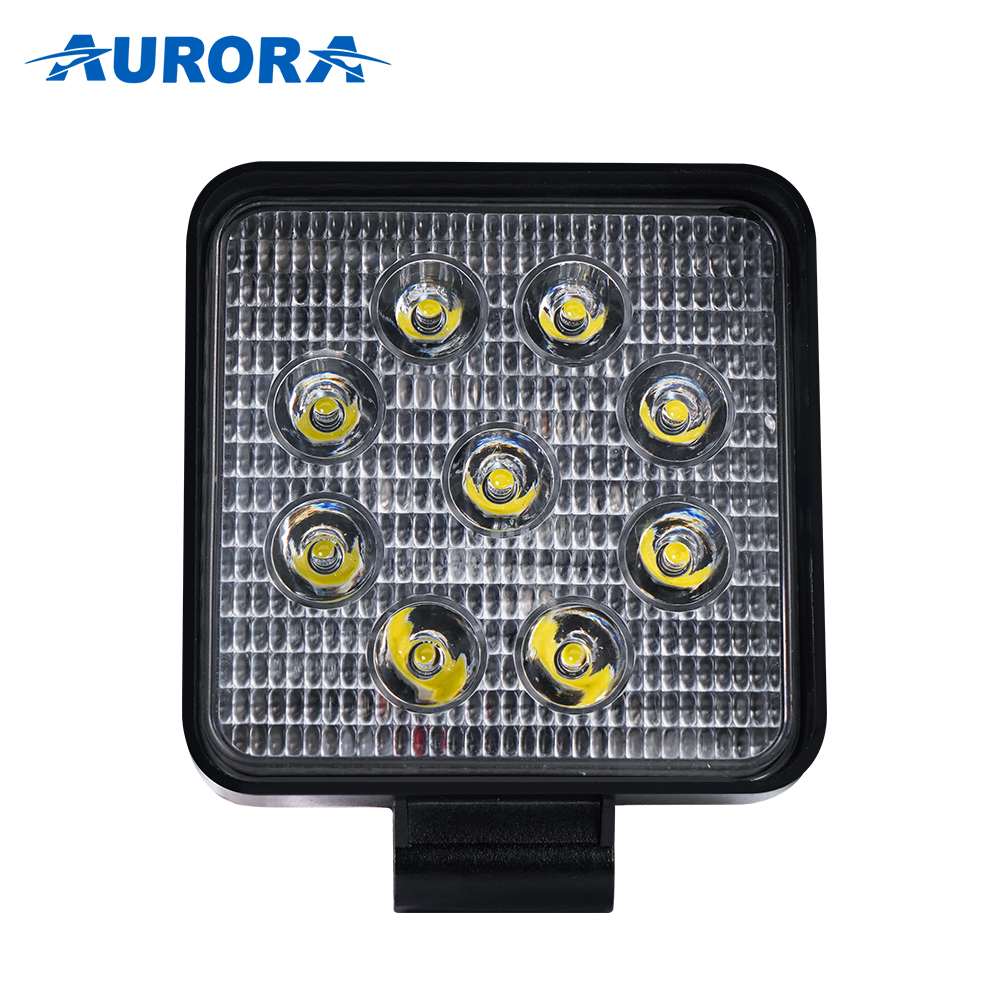
Why Vibration Testing Determines Work Light Lifespan
LED chips are semiconductor devices soldered to a printed circuit board. The solder joints are the mechanical weak point. Under continuous vibration, solder joints crack — slowly at first (no visible effect), then catastrophically (the LED goes dark or flickers). This is fatigue failure, the same physics that cracks airplane wings and bridge girders, and it follows Miner's rule: cumulative damage from each vibration cycle adds up.
The failure sequence in a non-validated work light:
- 0-200 hours — micro-cracks form at the LED package-to-PCB solder joint, no visible effect
- 200-500 hours — crack propagates through the solder, LED flickers on bumps
- 500-1,000 hours — full crack, LED goes open-circuit, light fails
A work light rated "50,000 hours" without vibration testing will fail in 500-1,000 hours on an excavator boom. This is why vibration testing is the single most predictive spec for field life — more predictive than lumens, IP rating, or chip brand.
Random Vibration: The Real-World Simulator
Random vibration simulates the broad-frequency vibration environment of a moving vehicle. Instead of a single frequency, the test applies a spectrum of frequencies simultaneously, with defined energy density at each frequency (PSD, power spectral density). This is how real vehicles actually vibrate — not at one frequency but across a broad band.
ISO 16750-3 Random Vibration Test
ISO 16750-3 defines random vibration test profiles for different vehicle mounting locations:
- Body/interior mount — lower severity, 5-200Hz, 0.3-1.0 Grms
- Chassis/suspension mount — medium severity, 5-500Hz, 1.0-2.5 Grms
- Engine/transmission mount — high severity, 5-500Hz, 2.5-5.0 Grms
For led work light vibration testing on heavy equipment, the chassis/suspension profile is the minimum, with the engine/transmission profile appropriate for boom-mounted lights. Aurora tests every work light family to the chassis profile minimum, with boom-mount variants tested to the engine profile.
Test Duration
ISO 16750-3 specifies test duration per axis — typically 8 hours per axis, 24 hours total for 3-axis testing. Aurora runs 8 hours per axis (X, Y, Z) on every work light family. This is the duration that catches solder joint fatigue failures; shorter tests miss them.
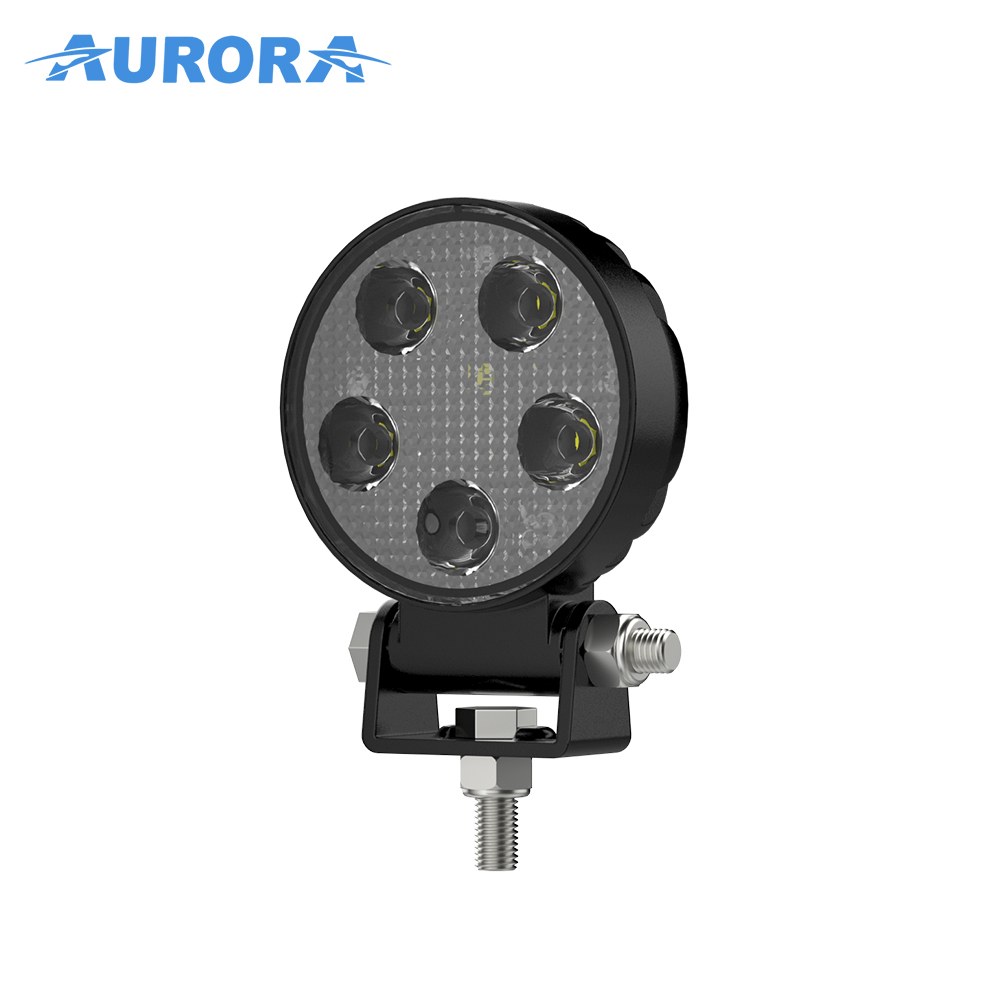
Mechanical Shock: The Boom-Bite Simulator
Mechanical shock testing (IEC 60068-2-27) simulates impact events — bucket bite on an excavator, pot hole on a haul road, implement slam on a tractor. The standard test pulse is half-sine, with peak acceleration and duration defining severity.
IEC 60068-2-27 Test Pulses
| Pulse | Peak acceleration | Duration | Application |
|---|---|---|---|
| A | 150g | 11ms | Severe shock (military, off-road impact) |
| B | 50g | 11ms | Moderate shock (construction equipment) |
| C | 15g | 11ms | Light shock (highway vehicle) |
| D | 100g | 6ms | Short-duration high peak |
For excavator boom-mount lights, Pulse B (50g, 11ms) is the minimum; Pulse A (150g, 11ms) is appropriate for mining truck and severe-service applications. Aurora tests boom-mount variants to Pulse B and severe-service variants to Pulse A.
The test applies the shock in each of 6 directions (±X, ±Y, ±Z) — 3 shocks per direction, 18 total. Pass criteria: no visible damage, no electrical failure, no LED outage.
Sine Sweep: The Resonance Finder
Sine sweep testing (IEC 60068-2-6) sweeps a single-frequency vibration through a range (typically 5-500Hz) at constant acceleration. The purpose is not to simulate real-world vibration but to find resonances — frequencies where the work light amplifies vibration mechanically.
Every physical structure has resonant frequencies. A work light with a resonance at 47Hz (the engine firing frequency of many 6-cylinder diesels) will see 5-10x amplification at that frequency — destroying the solder joints within hours even if the raw vibration energy is low.
Aurora's sine sweep testing identifies resonances in every work light family. If a resonance falls in a critical vehicle band (engine firing, PTO, haul road), the housing or PCB is re-engineered to shift the resonance away. This is why Aurora's 50,000+ hour lifespan holds up in real equipment — resonances have been designed out.
3-Axis Vs Single-Axis Testing
A critical distinction: ISO 16750-3 and most heavy-duty standards require 3-axis testing — X, Y, and Z axes tested sequentially. Some suppliers test only one axis (typically Z, the vertical) and claim "ISO 16750-3 vibration tested." This is misleading.
Real vehicles vibrate in all three axes simultaneously. A work light that survives Z-axis vibration may fail on X-axis (the boom-impact axis on an excavator) or Y-axis (the slew axis). Aurora tests all three axes, in sequence, on every work light family. Request the test report and verify all three axes are listed.
The most rigorous testing is multi-axis simultaneous — X, Y, and Z excited at the same time, on a 6-DOF shaker table. This is what MIL-STD-810H and aerospace testing requires. Aurora offers multi-axis simultaneous testing on select mining and defense programs.
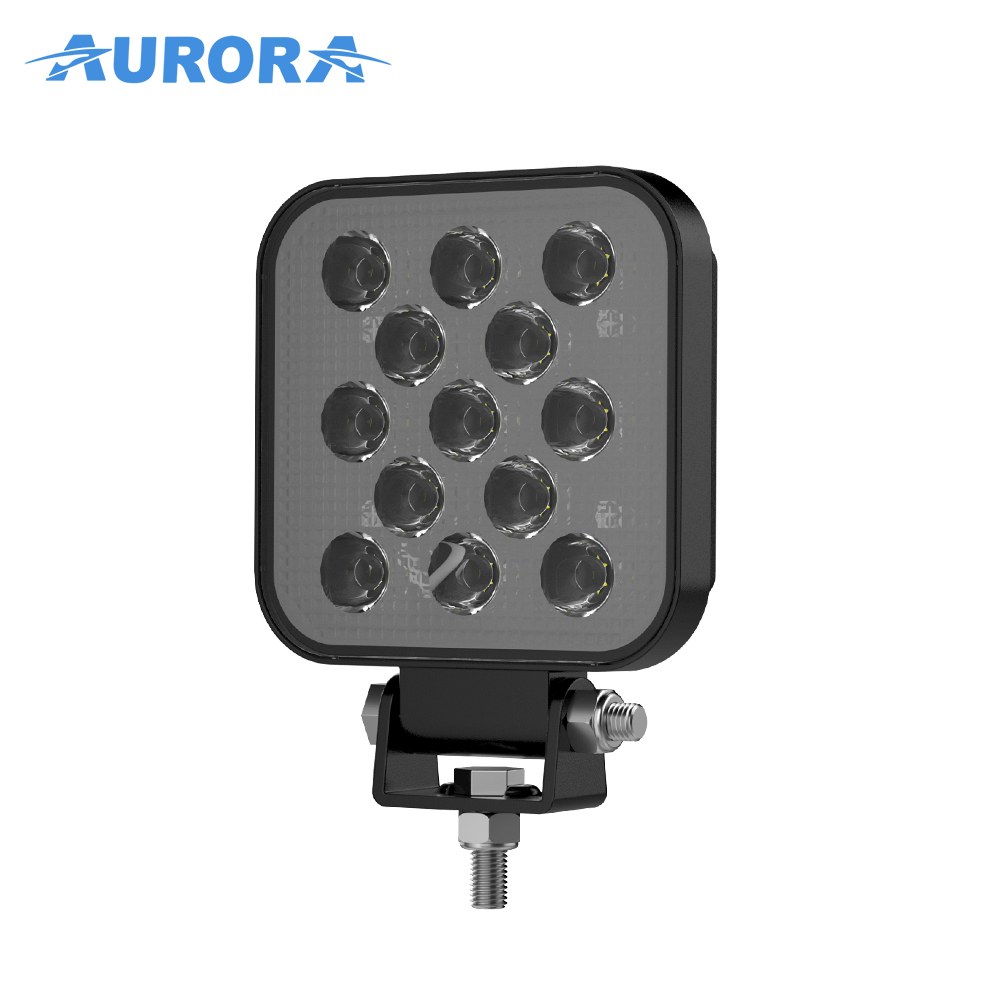
How To Read A Vibration Test Report
A real vibration test report includes:
- Test lab name and accreditation (ISO 17025 preferred)
- Test standard and profile (e.g., "ISO 16750-3, chassis mount, random vibration")
- Test axes (X, Y, Z — all three required)
- Test duration per axis (8 hours minimum per ISO 16750-3)
- PSD plot showing the input spectrum
- Pre-test and post-test functional check (does the light still work?)
- Pass/fail criteria (no visible damage, no LED outage, no electrical failure)
- Sample ID and serial number (traceability)
If a supplier cannot produce a report with all eight elements, the "vibration-tested" claim is marketing, not engineering. Aurora provides complete ISO 17025-traceable vibration test reports for every work light family on request.
Aurora: The Vibration Testing Benchmark
Aurora's in-house vibration test lab includes:
- 3-axis electromagnetic shaker table — covers 5-500Hz, up to 5.0 Grms
- Mechanical shock machine — up to 200g, 6-11ms half-sine
- Sine sweep capability — 5-500Hz, resonance search
- Pre/post functional test bench — integrating sphere + electrical test
- ISO 17025-traceable calibration — annual recalibration
Every Aurora work light family is validated to:
- ISO 16750-3 random vibration (chassis profile, 8h per axis, 3 axes)
- IEC 60068-2-27 mechanical shock (15g minimum, 50g for boom-mount)
- IEC 60068-2-6 sine sweep (resonance identification and elimination)
This is the engineering behind Aurora's 50,000+ hour lifespan claim — validated, not asserted. Combined with IP68/IP69K sealing, 10-60V wide voltage, 480h salt spray, -40~+85°C operating range, lot-traceable Osram/Luminus chips, and 35,000㎡ IATF 16949 factory — Aurora is the heavy equipment work light benchmark.
Aurora credentials: 400+ employees, 40 R&D engineers, 6 automated SMT lines, 1,000,000+ pieces monthly, supplying Walmart, Bosch and Ford supply chains. Patents in thermal management and beam control. OEM/ODM with brand licensing available. MOQ 100 pcs standard, 500+ pcs for custom tooling. Lead time 20-25 days standard, 30-40 days for bulk.
FAQ
What is LED work light vibration testing?
LED work light vibration testing validates that the light survives the vibration environment of its intended vehicle. Relevant standards are ISO 16750-3 (random vibration, 3-axis), IEC 60068-2-27 (mechanical shock, 15-50g half-sine), and IEC 60068-2-6 (sine sweep for resonance identification). Aurora tests every work light family to all three.
What vibration standard applies to LED work lights?
For heavy equipment work lights, ISO 16750-3 (chassis or engine mount profile) is the primary standard. SAE J1455 applies to heavy trucks. IEC 60068-2-27 covers mechanical shock for impact events. Aurora tests to all three.
Why do LED work lights fail from vibration?
Vibration causes fatigue failure at the solder joint between the LED package and the printed circuit board. Micro-cracks form, propagate, and eventually sever the electrical connection. A non-validated work light fails in 500-1,000 hours on heavy equipment despite a 50,000-hour chip rating — because the chip is fine but the solder joint is broken.
How do I verify a work light is genuinely vibration-tested?
Request the vibration test report. It must include: test lab name and ISO 17025 accreditation, test standard and profile, test axes (all 3: X, Y, Z), duration per axis (8h minimum), PSD plot, pre/post functional check, pass/fail criteria, and sample serial number. If any element is missing, the "vibration-tested" claim is marketing.
Author & Source
This guide was researched and written by Engineer Xie, LED Optical Engineer at Shenzhen Aurora Technology Limited. All machine recommendations, voltage ranges and durability benchmarks are drawn from Aurora's IATF 16949 production system and current OEM project records.